


Direct answer: A “floating diamond” is not one standardized setting. It is a visual effect created by reducing, concealing, or repositioning the structure that physically supports the stone.
Every wearable diamond requires support. Floating design does not remove engineering; it makes that engineering visually quieter.
Let the Setting Step Back
HERIMYST began the Floating Diamond Collection with a simple intention: let the jewelry recede so the diamond can come forward.
Prongs, baskets, links, and supporting metal are necessary, but they do not always need to dominate the composition. Through reduction, concealment, and careful repositioning, the structure becomes quieter. What remains is a purer encounter with the diamond—its silhouette, facets, transparency, and movement through light.
For HERIMYST, “floating” is not a visual trick. It is a process of editing: reduce what is unnecessary, preserve what is structurally essential, and give the diamond the clearest possible visual space.
How Structure and Movement Shape the Effect
Direct answer: The floating effect depends on two related factors: how visible the support remains and how freely the diamond or its mounting can move.
Reducing visible metal creates a more open silhouette. In articulated designs, movement continually changes the relative positions of the diamond, the light source, and the observer. That changing geometry alters the sequence of bright and dark reflections perceived as scintillation.
Movement does not change a diamond’s cut quality, polish, proportions, or intrinsic light performance. It changes the viewing relationship: the facets meet light and the observer from a continuously changing orientation.
Nine Design Approaches That Can Create a Floating Appearance
The following framework is illustrative rather than an official gemological classification. Some approaches describe how a stone is secured, others describe how support is concealed, and others explain how movement is introduced.
1. Drilled-Diamond Suspension


A ring, wire, chain, or cord passes through an opening in the diamond, allowing an articulated drop with little or no visible setting around most of the perimeter.
2. Rear-Hidden Ear Jacket
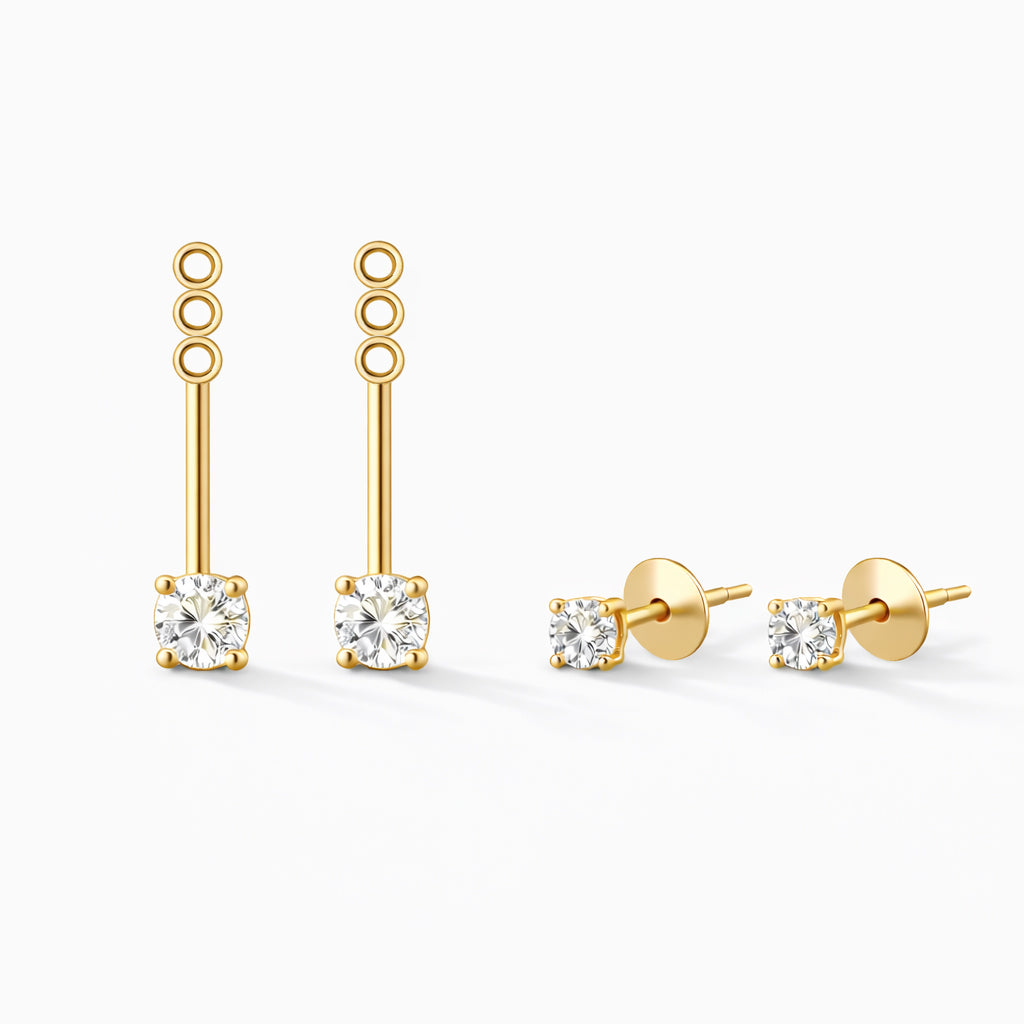

A front stud passes through the piercing while a separate rear component carries the lower element behind the earlobe.
3. Threader or Articulated Drop
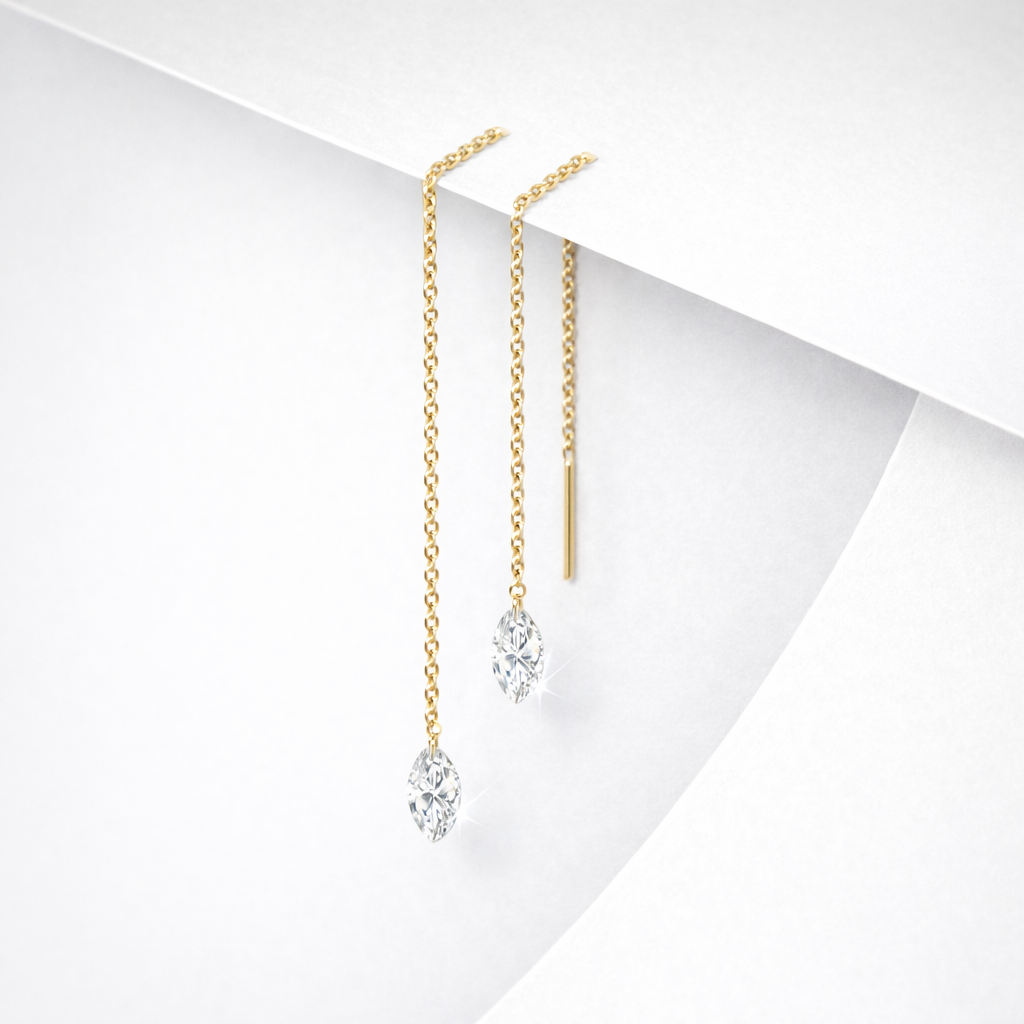

A fine chain or linked connection creates a fluid motion path for a suspended stone or mounted drop.
4. Tension Setting


Engineered metal pressure holds the diamond at opposing contact points, creating an open profile without a conventional basket.
5. Transparent Monofilament


A transparent line carries a stone or small collet and becomes visually discreet against the wearer’s skin.
6. Minimized Prongs or Bezel


A conventional setting is reduced, recessed, or refined so the metal has less visual presence around the stone.
7. Transparent Chamber


Mounted or loose diamonds move inside a transparent enclosure, often formed by sapphire-crystal windows.
8. Oscillating Pivot


A mounted stone hangs from a designed pivot, allowing small body movements to produce visible vibration or swaying.
9. Invisible Rail Setting


Grooves in the pavilion engage with concealed rails, removing prongs from the face-up view while keeping the stones fixed.
How HERIMYST Interprets Floating Design
- Floating Double Diamond Drop Earrings: rear-hidden ear-jacket architecture; wear the complete double-diamond composition or the upper stud alone.
- Marquise Floating Diamond Drop Huggie: hole-drilled diamond with an articulated gold connection.
- Floating Delman Threader Earrings: a threader combined with hole-drilled diamond suspension.
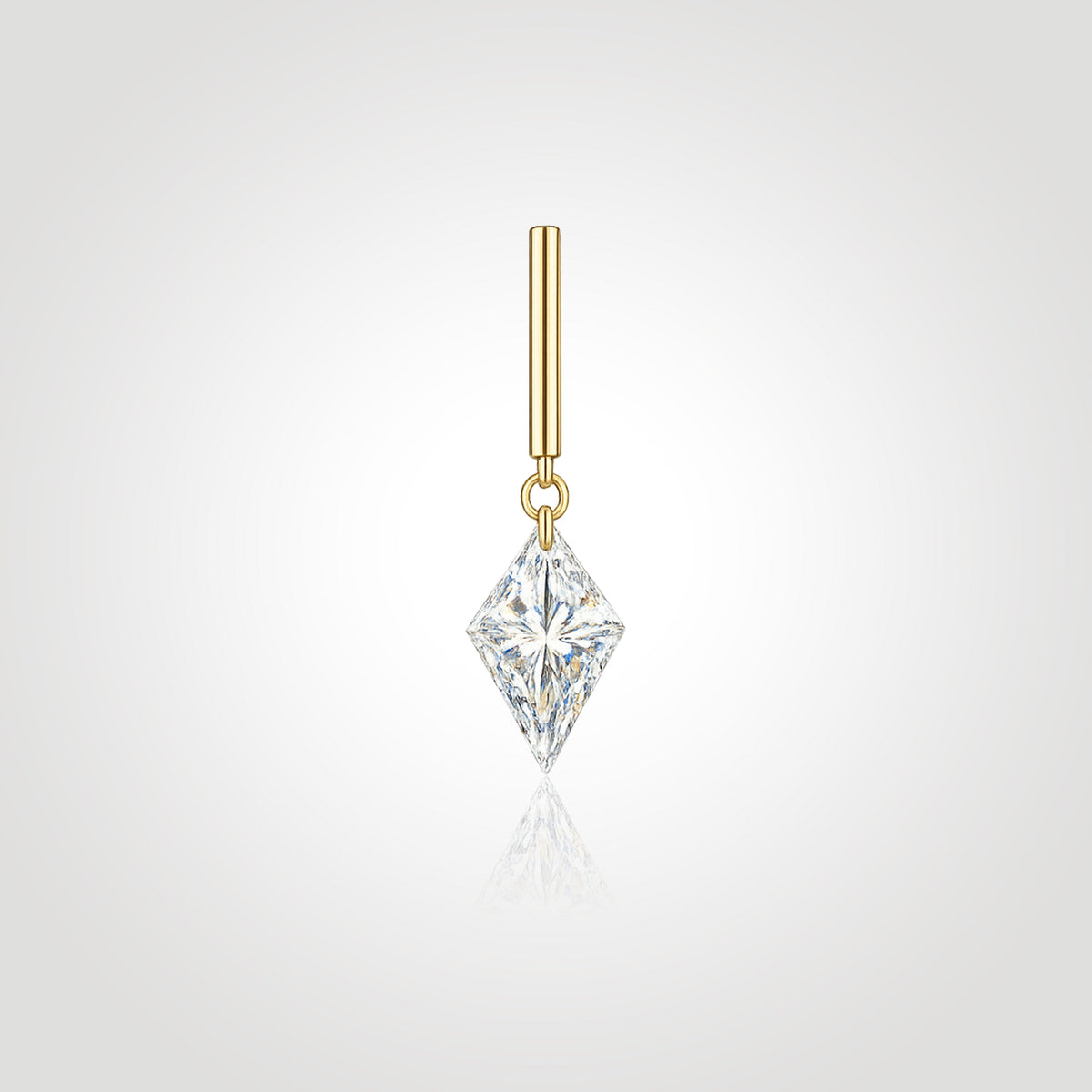
- Geometric Kite-Cut Diamond Drop Stud: a suspended geometric drop; exact batch specifications follow the Product Detail Page.
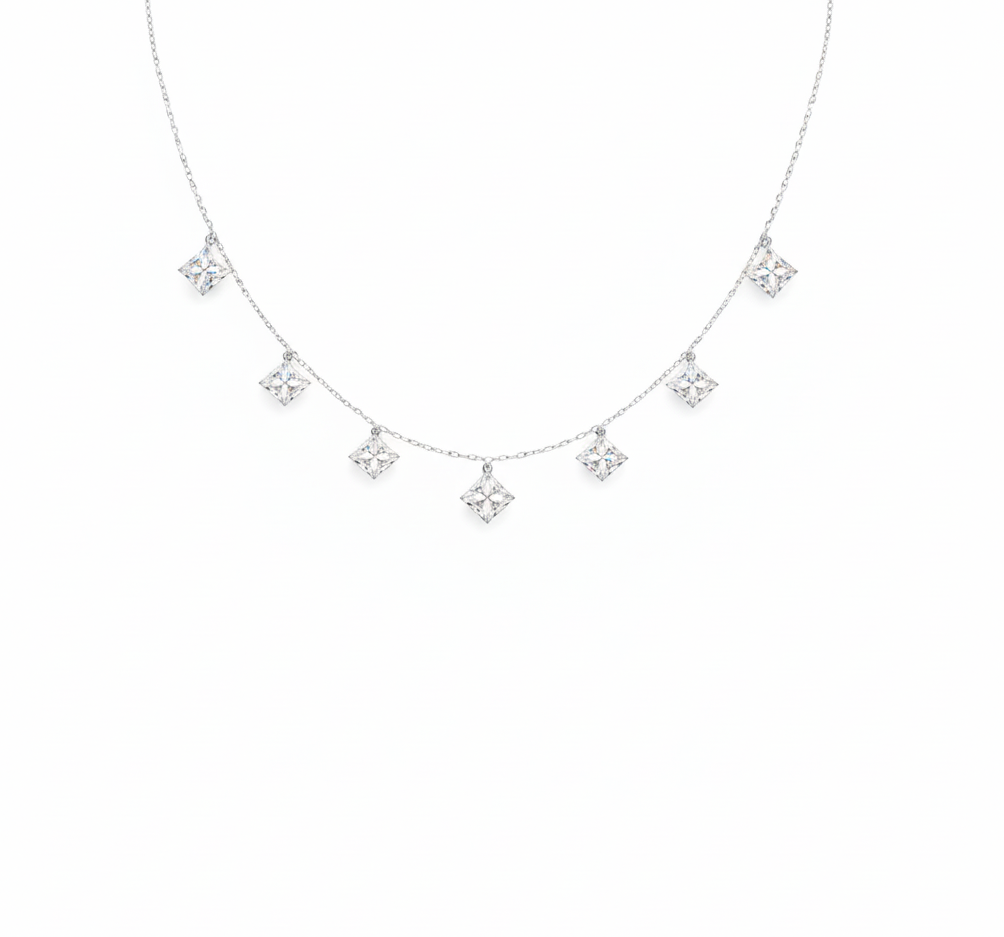
- Princess-Cut Floating Diamond Necklace: seven confirmed princess-cut diamonds spaced across a fine chain.

Case Study: The Rear-Hidden Double Diamond
The upper component is an independently wearable diamond stud. A separate rear element sits behind the earlobe and carries the lower diamond. From the front, the main connection is visually concealed, allowing the two diamonds to read as a clean vertical composition.
Case Study: The Suspended Marquise
In the Marquise Floating Diamond Drop Huggie, the 14K gold connection passes through an opening in the lab-grown marquise diamond. This removes the need for a conventional setting around most of the stone’s perimeter. A short articulated connection allows the drop to change orientation as the wearer moves.
Two Ways to Wear the Double Diamond
Worn with the rear element, it creates the complete two-stone floating composition. Remove that component and the upper diamond becomes an independent stud for a quieter everyday look.
Frequently Asked Questions
Is a floating diamond actually unsupported?
No. Every wearable diamond requires physical support. “Floating” describes how that support is minimized, concealed, repositioned, or made visually discreet.
Does movement make a diamond intrinsically brighter?
No. Movement changes the relative orientation of the diamond, observer, and light source, creating a changing sequence of reflections. It does not change the diamond’s cut grade or intrinsic light performance.
Can the Floating Double Diamond earrings be worn as studs?
Yes. The upper diamond stud can be worn independently. The rear element is added when the complete double-diamond composition is desired.
What is the main difference between the Marquise Huggie and Delman Threader?
Both use a suspended diamond, but the huggie provides a compact hoop-based connection while the threader uses a fine chain passing through the ear, producing a longer and more fluid motion path.
Sources and Methodology
This article separates general explanations of diamond appearance from item-specific HERIMYST product facts. Product structure and specifications follow the corresponding Product Detail Pages; simplified diagrams illustrate concepts and are not manufacturing drawings.
- GIA: A Foundation for Grading the Overall Cut Quality of Round Brilliant Cut Diamonds
- GIA: Complete Guide to Engagement Ring Settings
- HERIMYST Floating Diamond Collection
Product dimensions, carat weights, metal specifications, availability, and connection details may vary by item. Refer to the current Product Detail Page for the specifications governing an individual piece.